Know the Korean market before you spend on it.
Short, sourced Korea market reports for consumer and food brands entering from abroad: who you compete with, what they charge, where they sell, and what the import rules require. Every fact links to a public source. What I cannot confirm is labeled, not guessed.
Download the free sample (PDF) See pricing- 32 sourceslinked in the sample report, Korean and English, government and retail pages
- 14 competitor listingswith price per bar in KRW and USD
- Korean-EnglishI read the Korean pages, regulations and labels myself
A real report, free
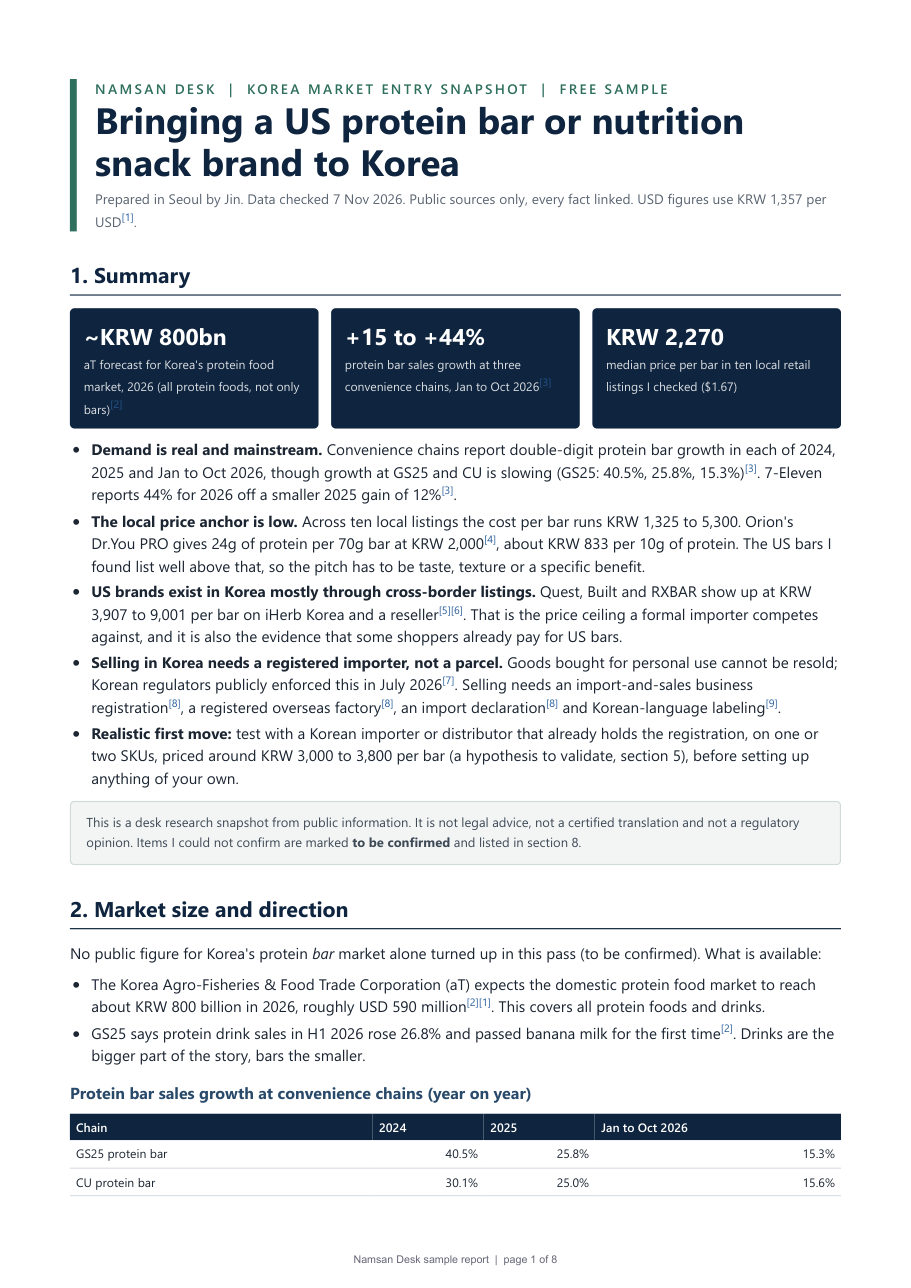
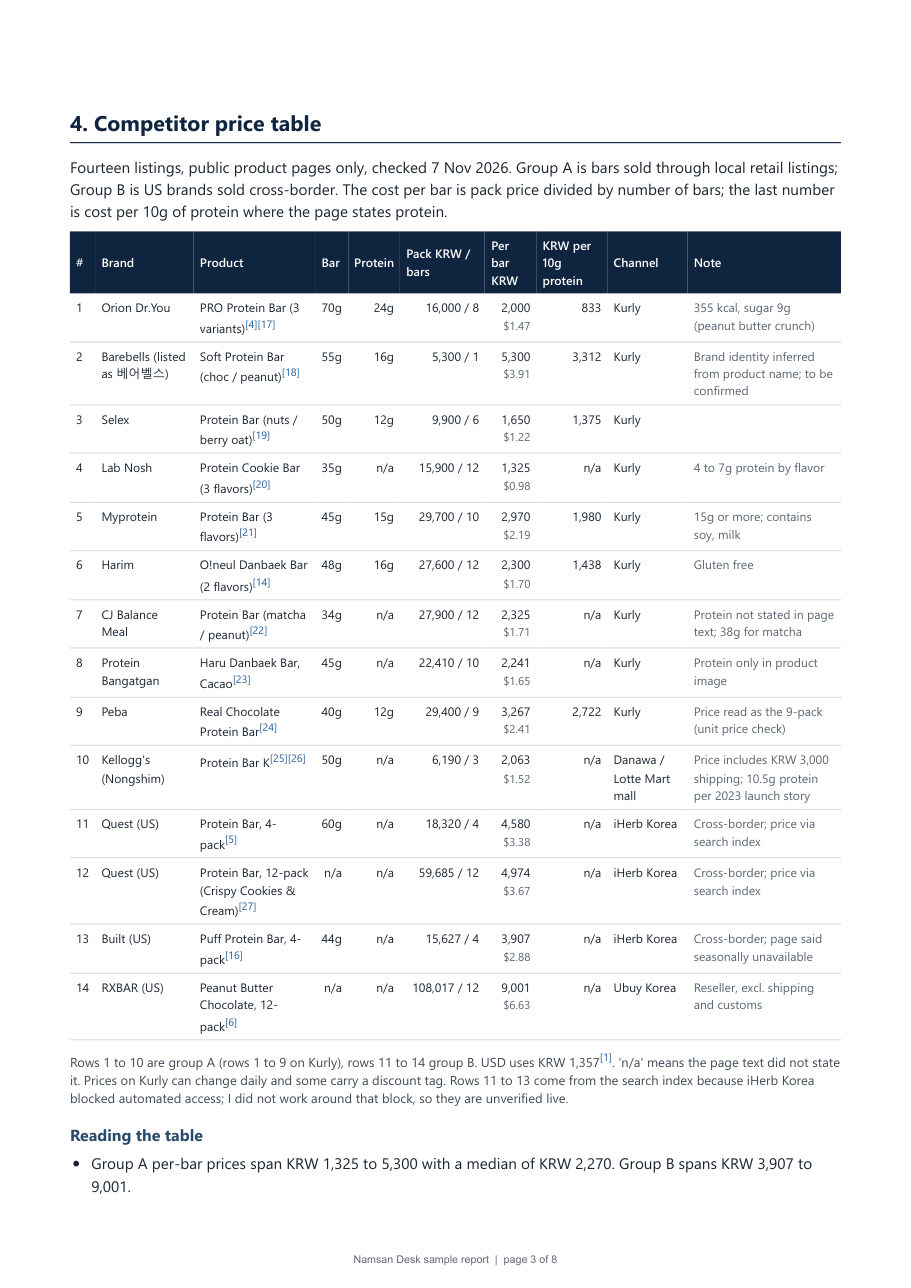
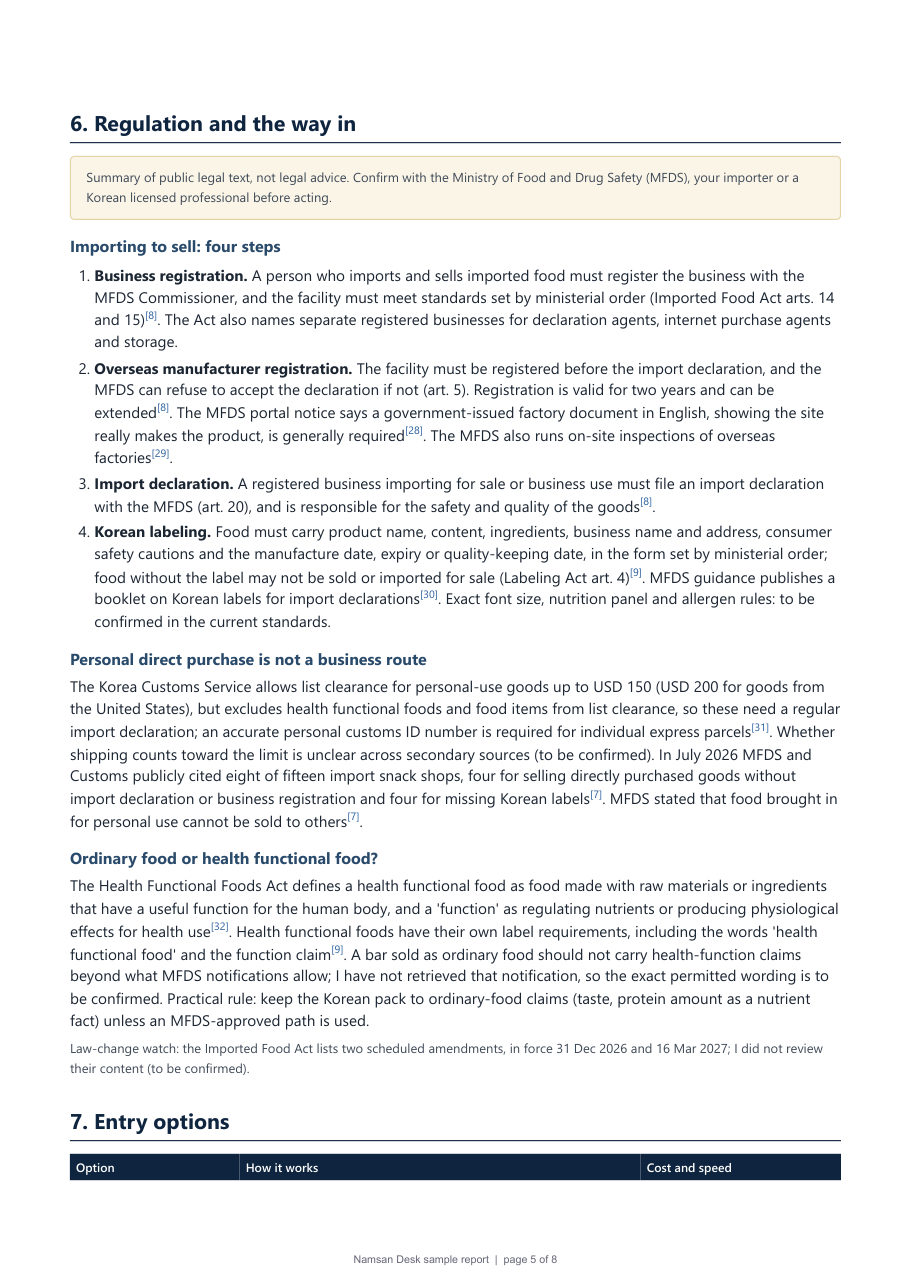
The sample is a full 8-page study: Bringing a US protein bar or nutrition snack brand to Korea. Market direction, channels, a 14-product price table, a suggested price position, the import and labeling route, entry options, risks and next steps.
What a snapshot answers
Four questions a founder or category manager asks before a Korea decision.
Who is already there?
Competing products on Korean shelves and sites, with size, protein or key spec, pack price and price per unit.
Where would you sell?
Coupang, Naver, Kurly, Olive Young, convenience chains, cross-border sites: what the public record shows and what is still open.
What does Korea require?
Importer registration, overseas factory registration, declaration and Korean labels, read from the law text and the regulator's own pages.
Pricing
Fixed prices in US dollars. Each report is written for one product category and one market question you give me.
Snapshot
- 4 to 6 pages
- 5 competitors with prices
- Channels, regulation overview, next steps
- Delivered in 4 business days
Full report
- 10 to 15 pages
- 15 to 20 competitors with prices
- Price comparison in Excel
- Delivered in 7 business days
Korea Market Monitor
- One update a month
- Competitor and price changes
- Same sourcing rules as the reports
How it works
No calls needed. Everything is written down.
- You brief meYour product, your target channel and the one question you need answered.
- I researchKorean and English public sources: retail pages, regulator pages, law text, news.
- I write it upA PDF with a source link on every fact. Excel added for the Full report.
- You decideOpen items are listed plainly, so you know what still needs a quote or a regulator.
Questions
Is this legal advice or a certified translation?
No. I am not a certified translator and not a lawyer. The reports summarize public legal text and regulator pages to help you plan. Before you act on a rule, confirm it with the regulator, your importer or a Korean licensed professional.
Where do the facts come from?
Public sources only: Korean government and regulator pages, the law text, retailer product pages, trade news. Every fact carries a link. I do not use paid databases, private panels or scraped personal data. If a retailer blocks automated access, I use another public source instead of working around the block.
What if you cannot find a number?
I write "to be confirmed" and list it under open items. I do not estimate a number to fill a gap.
Will you keep my brief confidential?
Yes. What you tell me about your product, plans and pricing stays between us and is not reused in other reports or published. The free sample is a separate study built only from public sources.
Which categories do you cover?
The sample is food and nutrition snacks. Other consumer goods are possible when the answer lives in public Korean sources. Say so in your brief and I will tell you honestly whether a snapshot can answer it.
How fresh is the data?
Each report states the date its sources were checked. Prices and rules change, so the Monitor plan exists to track the moves that matter.
Who writes this
Jin, Seoul. Ten years running a company, handling finance and operations myself. Bilingual Korean-English. I read the Korean pages so you do not have to, and I write the way I would want a report written for my own decision.